By Bea Patel, TLE Property Editor and Director of Shop for an Agent – the estate agent comparison website
Figures released last week (30 January 2017) from Centre for Cities highlights the shape of the UK’s 63 biggest cities in the run-up to the triggering of Article 51.
The 2017 data reveals a clear divide between the North and South, with goods being exported mainly from the North and services from the South.
Centre for Cities emphasise the relevance of trade and exports in the run-up to Brexit. Property investment consultancy, Properties of the World stressed the importance of inward investment.
Jean Liggett, CEO of Properties of the World, said: “2017 is going to be a landmark year for the UK’s cities. Seven of them will be electing metro mayors in May, with the newly elected officials having to hit the ground running in terms of dealing with the fall-out from the government’s triggering of Article 51, which should take place by the end of March. Trade, exports and investment will require firm, decisive management for cities to thrive over the year ahead.”
Manchester Ship Canal, Salford Quays
Greater Manchester and Liverpool City Region are two cities that will be directly electing their own metro mayors in May.
Both cities stand out in terms of their ability to face Brexit head-on, according to Properties of the World. Not only will their metro mayors and reliance on the production of goods stand them in good stead, but the cities have unique attributes that should be of use.
Jean Liggett explains: “Manchester and Liverpool both enjoy property-related factors that will help to see them through the choppy waters of the Brexit process. The latest Hometrack data shows that Manchester’s property prices grew at the second-highest rate in the UK during 2016, while Liverpool topped the table for growth rate over the past three months. These dynamic urban areas are perfectly positioned to lead the UK’s cities into Brexit and out the other side.”
Manchester City Centre
The Hometrack UK Cities House Price Index reveals Manchester’s property market is growing at the fastest rate for more than a decade. It is second to Bristol in terms of its 2016 growth rate, and may be ready to overtake it during Q1 2017.
The 8.9 per cent year on year rise in prices experienced in Manchester is a result of a significant lack of supply – something which all UK cities are struggling with because of urbanisation and a rise in popularity of city centre living.
Liverpool, with 21.57 per cent of households renting privately (or living rent-free) according to Centre for Cities, is enjoying a property market boom. Prices rose by three per cent over the last three months – the highest rate of any UK city analysed by Hometrack.
Liverpool City Centre and Docks
Liverpool and Manchester are key UK locations for property investment from overseas buyers as well as domestic investors.
Rents rose by 1.2 per cent in the North West over the past year, according to the Office for National Statistics. But regional variations within the area’s cities resulted in much higher rises in urban locations.
According to Jones Lang LaSalle, rents in Manchester city centre rose by around 11 per cent in 2016. They project house prices will grow by 4.5 per cent per year for the next five years. HSBC has identified the city as one of the top four buy-to-let hotspots in the country, reporting rental yields of 7.6 per cent.
9 FEB, 2017by Paulina Carl
The North West is the country’s third most populated region – after London and the South East – which means the need for housing is always huge for the Northerners.
The property market in England’s North West has seen a constant increase in interest from buyer as well as value in homes over the last couple of years. And with more and more people being pricedout of the London market and the Northern Powerhouse initiativepraising the area, more and more Southerners decide to make their way up north, too.
When it comes to availabilities in the North West, the area has got something on offer for any investor’s desire. With a broad range of population age and living situations as well as location, the market covers the whole property spectrum.
Liverpool and Manchester are the area’s biggest cities and they both offer great connections to for those interested in regular trips down to London as well as anywhere else on the island. Additionally, the arrival of the HS2 will only improve travel times and make the country grow closer together.
And the ever growing Manchester Airport, which has recently seen an investment of $100m, connects visitors to multiple locations within the UK as well as abroad.
They mean business
Although for most people England’s North will forever be connected with the textiles industry or the Industrial Revolution, these days it’s mainly IT, digital and financial services that can be found up north.
A variety of companies have recently decided to either relocate entirely to a northern city or at least open a second head quarter in the North. Especially with some Brexit uncertainty playing up, the North often gives the better options for business and investment.
Once you’ve made up your mind and you start looking around, make sure to not only check out the big cities. People are slowly moving further out, and so are the best investments.
BYDOMINIC SMITHERS (21:45, 12 FEB 2017)
You only need to look up at the cranes which dominate the Manchester skyline for evidence of the region’s booming property market – but it’s not all about big developers.
Investing in property – whether it’s a run down terraced house or a ready-made purchase to let out straight away – is a fantastic way to make money, whatever your budget.
So, we’ve quizzed estate agents, developers and investment firms to put together a guide on making money from the local property market.
To break it down we have split it into five different models; student lets, immediate return, long term investment, off-plan developments and ‘fixer uppers’.
Here is everything you need to know if you’re thinking of becoming the next Sarah Beeny.
Long term rental investment
Wythenshawe
Why?
South Manchester has a combination of good schools, great transport links and a variety of housing stock, which makes it a good option for anyone looking for a relatively stable place to invest. And our experts suggest looking at Wythenshawe in particular.
The extension of the Metrolink service to the area is already causing increasing demand for property there.
Rob Jones, director of Property Investment UK, said: “The infrastructure in business and commerce near the airport is certainly having – and set to continue to have – a ripple effect on demand and house prices are continuously increasing.
“Wythenshawe I would definitely say is part of that and should get growth as well.”
A spokesperson for Manchester Airport said: “The growth of Manchester Airport also brings benefits to the surrounding communities and the wider region as a whole in a number of ways. From job creation, increased inward investment/tourism and economic benefits from our annual dividend, a growing Manchester Airport is a positive for millions of people.”
Where?
Over the years, some areas of Wythenshawe have had a bad reputation but successful property investors will tell you not to judge a book by its cover.
Wythenshawe has undergone a massive shift in recent years. With increasing transport infrastructure in the area by way of the Metrolink as well as the £280m airport expansion scheme, the town is definitely on the way up.
Sean Callaghan, Managing Director at Callaghans Estate Agent, said: “As with many inner city areas, Wythenshawe has experienced high levels of unemployment, underachieving schools and a lack of high grade shopping facilities.
“The injection of funding into the area, increased job opportunity and more affordable housing is already having a positive impact. We have seen a marked turnaround in recent years with the refurbishment of the Civic Centre, increased employment at Manchester Airport and the Amazon Warehouse.
“In terms of property we know that long-term, secure positions at the airport will create a further demand for first time buyers and Investment buyers.”
Now you have the area, where is good to buy?
According to the experts, the staples of investment will always be transport links, schools and amenities. Roads running along the tram line therefore are proving particularly popular with buy-to-let investors, such as Simonsway in Woodhouse Park, or Hollyhedge Road in Benchill, both of which were singled out by local estate agents, Callaghans.
Price
A three bed semi will cost you between £110,000 and £160,000.
At current market prices you can expect a return – depending on what part of Wythenshawe you buy in – of anywhere from £600 to £1,000 p/m.
If your budget isn’t quite as flexible then you might be tempted by a more modest terraced house, which are available for around £90,000 to £115,000.
Pitfalls?
No investment is 100 per cent safe, so it’s not for the faint hearted. You can’t just ‘dip your toe’ into property, it’s called an investment for a reason.
Buying at auction, for example, can reap huge rewards but you also need to be prepared for expensive pitfalls.
“Once you’ve signed on the dotted line it’s yours, warts and all, so you need to make sure you’ve done all your due diligence and have the money to pay for it”, said Andrew Thompson, from Edward Mellor auctions.
Having the money to finance the investment for the long term is also vital as there may be times when the house is left empty and without a tenant. This will mean either waiting for a tenant to come in or taking a hit on the rent you charge.
Immediate rental yields
Droylsden town centre(Photo: Manchester Evening News)
Droylsden/Denton
Why?
Droylsden and Denton are our top tips for an immediate profit.
Charlotte Puddy, from Abode Property Management, said: “They are really great. You can buy a three bed property there and you will rent it out straight away.
“People that live in these areas are generally those who have always lived there and have family roots there.”
That, combined with the expansion of the Metrolink network in 2010 through to Ashton-under-Lyne, has helped join towns like Droylsden and Denton up with the city centre, making them great commuter options.
Where?
You don’t have to be a property expert to know that WHERE you buy is probably more important than WHAT.
People want to be close to everything; shops, bars, coffee shops and transport links. If they are too far away from them it’s only going to affect what people are willing to pay.
Unsurprisingly then, you want to be right in the centre.
If you’re looking at Droylsden that means roads coming off Market Street and Manchester Road, where trams run regularly down to the Etihad campus.
For example, Tame Road in Denton has a wide selection for semi detached properties, close to the town centre and recreational pitches.
Laura Dawson, office manager at Sleigh and Son in Droylsden, said: “It’s true, rentals are booming here.
“A couple of reasons behind that are that house prices aren’t too high and with the tram it’s great for people getting into the city. Being able to commute is a big factor for people.”
Price
House prices have risen by over £4,000 in Droylsden and Denton in the past twelve months, so if you’re looking for a bargain you may need to move quickly.
If you’re working with a smaller budget then you may opt for a terrace, which will set you back an average of £107,862 in Droylsden, and a touch more, £111,450, in neighbouring Denton.
Ms Puddy said: “Denton has an excellent supply of two and three-bed terraces, often garden fronted. There are pockets of new build properties across Tameside and we expect this to increase as house building continues to rise, however the traditional style terraces form the bulk of the property stock in the area.”
However, according to experts the best money is in larger properties, which attract growing families who want to stay for several years.
If you’re looking for a longer term tenancy then with a higher yield then a three bed detached house might be a good option.
The average semi-detached home in Denton goes to market for around £157,480 while you can pick one up in Droylsden for just £132,003. But like anything prices can vary on the state of the property to its location as well.
Pitfalls
Again no investment is fool proof, so if you haven’t got the finances and the patience then you should consider if it is really for you.
Despite both demand for properties and a high rental yield (7 per cent approx) nothing is a certainty, so as with all types of investment, do your research.
Student rental
Fallowfield(Photo: Manchester Evening News)
Fallowfield/Salford
Why?
As we’ve said on numerous occasions, Manchester is the best city in the world and no one knows that better than the students who flock here in their thousands every year and not just because we have the 55th best university in the world.
Manchester has a fantastic reputation, it’s every bit a modern city and is always at the forefront of everything from food and drink to art and music.
So, when you have over 70,000 students descending on a city each year they are going to need somewhere to live.
Also students tend to live in larger groups, so instead of having one tenant or a couple in a flat, you could have anywhere from three to 10 in a property.
This is a massive incentive for investors as it means that you can make more money from less property.
And because of the sheer volume of students, you will have a constant supply of tenants, leaving your property empty for a much shorter period of time.
Where?
Graham Davidson, managing director of Sequre Property Investment, said: “Those looking to invest in a property that will attract student tenants should stick to the city centre as this is where rental demand from students is highest. They want to be within walking distance of their campus and have easy access to shops, bars and sports facilities.”
Fallowfield, Rusholme and Withington are synonymous with student housing and attract the majority of the student population, year in, year out.
Fallowfield is home to different styles and sizes of property, such as larger, traditional Edwardian properties on Egerton Road to blocks of flats on Granville Road and elsewhere.
Students going to Salford University will however be looking at roads closer to campus, meaning streets off Frederick Road are popular.
Pitfalls?
Student rentals usually have fantastic financial returns but they do come with some drawbacks that any potential investor should look out for before jumping in, head first.
You need to be prepared for anything and everything to break on regular basis, including furnishings, doors and windows.
Charlotte Puddy said: “I believe the rental yields are really good, but it completely depends on what kind of person you are.
“For the right person you can make a lot of money, however students today are demanding a lot more from their properties; wifi, flat screen TVs, etc.
“Gone are the days when students would accept living in a pit.”
Therefore, there is increasing competition from luxury student living, especially in cities like Manchester. Vita Student and Lambert House offer free breakfast, wifi, Netflix and even bowling alleys in some cases.
This isn’t for everyone though, most students still prefer things in Fallowfield and Withington, a bit rough around the edges, which you can’t recreate in other parts of the city.
Off plan
Salford(Photo: Manchester Evening News)
City Centre/Salford
Why?
Our city’s skyline has changed dramatically over the past ten years, with a new apartment block or office tower popping up seemingly everyday.
There is a buzz around they city centre, which has seen the population mushroom to over 90,000. As a result demand for property in Manchester has never been greater.
Ged McPartlin, director at Ascend Properties, said: “Development is coming out of the ground thick and fast across Manchester in order to meet the demand for new homes. The city centre is certainly seeing a fantastic wave of new PRS schemes and development is rife so investors would do well to consider investing here if they want to buy off-plan.”
Also, off-plan can sometimes give investors the chance to get a property for cheaper than they would if they bought it after completion.
This is of course a gamble, but depending on the success of the site can save you thousands.
Michael Jones, from Residential Investment, said: “Off plan investments are attractive as early buyers can have the pick of the best units available and secure an apartment at the lowest price, as most developers increase the price as construction advances.”
Where?
We recommend the NOMA development close to Victoria train station. It’s an area which has undergone an incredible transformation, seeing around £800m pumped in to develop the area.
With the Co-op being based there and a host of transport links including trams and national rail lines, it’s perfect for commuters wanting to live in the city centre, but also the freedom to get out.
At the other side of the Irwell, Middlewood Locks is set to be built, with over 2,000 homes planned.
This is a case where being a bit further out of the city can actually work in its favour.
Charlotte Puddy said: “It’s a good little area around there. You can walk into town but you can also jump in your car and get out of the city. It’s got great transport links with the A57 running right past it.”
Price?
That’s a bit like asking how long is a piece of string – it really depends on what you’re willing, and able, to pay.
Prices vary from scheme to scheme, based on multiple factors such as the build cost and the location, so it’s hard to get an average.
You could purchase a two-bed flat in Halo Apartments, right in the heart of NOMA, for around £210,000.
If you were to invest in St John’s Quarter, on the site of Old Granada Studios, you could be looking to pay almost triple that.
Similarly, Angel Gardens is planned to be built there, with approximately 466 flats and will no doubt be a draw if completed.
Pitfalls?
Off-plan developments are fraught with risk.
It might seem like a safe bet – a new build with modern appliances and a city centre location.
But there can be problems such as delays and increases to the build cost. Perhaps most importantly – will people want to live there when it is complete?
You are putting a lot of money – and trust – into a developer to do a good job on the property, so it’s vital that you research their company and its history thoroughly.
Giles Beswick, Director of Select Property Group, said: “When buying purpose-built schemes, the credibility of the developer and the clarity of who’ll be managing the property are key factors to consider.
“A lot of providers charge a high initial fee to reserve a property. Because they’re not always the developer themselves and have third party costs and commissions to pay, they need the capital to front the project. This should be a red flag for investors.”
Also, we hate to break it to you but you will not be the first to think of the idea. Off-plan investment is not a secret, so expect competition.
That means you might have to wait some time to let out your brand new flat, even when it’s finished.
Charlotte Puddy said: “You could buy in a development where there are 50 flats and then when you try and let it out so does everyone else. If it’s in demand it’s great, but if it’s not and you can’t (let) then you will have to drop the price.”
(Photo: Manchester Evening News)
Fixer upper
In the age of ‘Homes Under the Hammer’ and ‘Location, Location, Location’, everyone seems to fancy themselves as a property expert.
People like the idea of buying a property, doing it up and selling it for a massive profit, but sadly it doesn’t always work like that.
We don’t want to sound like a broken record but research is key, as well as having the finances to back it up.
Andy Thompson said: “When looking for a ‘fixer-upper’ the general location is less important in my opinion – it’s more about the value and potential value of a particular property.
“Done properly, there can be really lucrative rewards in renovating and selling on a property but it’s a fiercely competitive market and therefore it pays to keep an open mind with regards to your ‘target location’ and not necessarily pigeonhole yourself to just the areas that you ‘know’.”
Fallowfield(Photo: Manchester Evening News)
How?
You can buy a great house but if no one wants to live in the area then it’s useless.
Similarly, if you buy a derelict property with all manner of things wrong with it, even if it’s in a great spot the cost to get it up to scratch might not even cover your outgoings.
It’s all about keeping those books balanced, which is often the most difficult thing.
Andy Thompson said: “For me, the profit is in the purchase; if you pay too much for the actual building, whatever improvements you go on to make, you’ll always be on the back foot with it. The flipside to this is, if you buy well, often you won’t need to get your hands overly dirty to make a decent profit.”
So, the advice from the experts is, if you’re thinking about taking on a challenging property, keep it as simple as possible.
Andy added: “If you’re new to the game it might be better to cut your teeth on a smaller project, somewhere like Edgeley, in Stockport, where there is a mass of terraced houses.
He added: “These are not only easier to physically renovate but they’re also easier to value, so you’re less likely to pay too much for something and struggle to sell it later on.”
(Photo: Manchester Evening News)
Examples?
Jamil Shahid took to property development after retiring after having experience as a landlord in the past.
He has taken on several broken-down homes and renovated them to sell on.
Most recently he bought a four-bedroom detached house in Levenshulme for around £205,000 which has now gone one the market for £340,000.
He said: “I have always been interested in property and had a few apartments in town for years but since I stopped working I now have more time.”
But how do you decide WHERE you should invest?
According to Mr Shahid it’s best to stick to what you know.
He said: “I only look in south Manchester because I don’t know the north very well. I have lived here for years so I know it and I’m used to the area.
“I’m sure there are bargains to be had in the north but I haven’t been there yet.”
(Photo: Manchester Evening News)
Prices?
Again they can vary greatly from auction room to auction room, depending on the interest.
You can therefore pay any price, from £30,000 to upwards of £200,000. The key thing is to always stick to your budget, because you will need the extra cash when it comes to renovation.
And don’t forget you will still have a mortgage and stamp duty to pay, with or without a tenant.
Pitfalls?
Perhaps more than any other kind of investment here, buying a property in bad condition poses the most risks.
Things can and will break, so you need to be prepared for the cost.
Charlotte Puddy said: “You need to make sure you don’t pay more than it’s worth.”
This is a sentiment shared by experienced buyer Mr Shahid.
He said: “The price can sometimes be too much, even in the auction room, but it can depend on how many people are interested.
“So you have to have the finances and you need experience.”
Wythenshawe(Photo: Manchester Evening News)
Buying the property is only half the battle, once you have it, that is when the real work starts; renovation.
This is the part that can often trip investors up. They have watched one too many episodes of Grand Designs and spend all of their budget in a week.
According to the experts, finances are key and you will always need something for a rainy day.
For example. Mr Shahid’s property in Levenshulme cost around £60,000 to renovate with another £15,000 in stamp duty.
That is not cheap by anyone’s standards and someone will have to foot the bill at the end of the day; you.
And even when it is complete, there is no guarantee someone will buy it.
You could wait weeks, months or even years to sell a property, so bear that in mind.
9th February 2017
A shortage of supply in both the sales and lettings residential markets in the UK presents a huge challenge for housing with sales flat and prices and rents set to continue rising, according to chartered surveyors.
UK house sales still lacked momentum in January and prices and rents increased mainly due to a shortage of available properties with the lettings sector likely to see supply tighten as buy to let investment is expected to decline.
The latest monthly report from the Royal Institution of Chartered Surveyors (RICS) reveals that new landlord instructions in the lettings market failed to improve for a fourth consecutive quarter across the UK in the first month of 2017.
Moreover, respondents predicted that this issue would worsen over the medium term and indicated that they expected landlords to decrease the size of their portfolios over the next three years.
Changes to Stamp Duty in April, alongside scheduled cuts to mortgage interest tax relief, were both seen as important factors diminishing the attractiveness of buy to let as an investment as 28% more respondents felt that landlords were likely to decrease the size of their portfolio over the next twelve months.
Over the next three years some 26% more contributors expected landlords to scale-back their portfolios. It is, however, worth noting that the sentiment survey was obtained prior to the latest housing announcements in the Government’s White Paper.
During the three months to January, tenant demand for rental properties continued to increase at the national level with the continued imbalance between supply and demand expected to squeeze rents higher. The exceptions to this pattern across the UK are to be found in London and Scotland where tenant demand is slipping back a little. Rent expectations essentially remain flat in Scotland, but are more downbeat in the capital.
Over the next five years, rental projections point to a cumulative increase of just over 25%, outpacing house price inflation over this time period and respondents anticipate prices will rise a little under 20% on the same basis.
New buyer enquiries were more or less unchanged during January, although, with only 5% of surveyors reporting an increase in demand, this is the lowest reading since August 2016. New instructions, having remained flat for the past few months, deteriorated in January and have now failed to post a positive reading in eleven consecutive months.
Indeed, the report also shows that 11% more chartered surveyors saw a fall in new instructions in January rather than a rise, leaving average stock levels on agent’s books still close to historic lows.
At the same time, sales were flat for the second month in succession with 1% more chartered surveyors seeing a fall in sales over the month. This headline reading does mask regional variation with the sales balance rising firmly in the South West while at the other end of the scale, it declined in central London.
Sales are however predicted to improve in the near term with 15% more respondents expecting a rise over the next three months nationally. What’s more the balance of respondents predicting that sales will increase over the year to come reached a one year high of a +37 net balance.
Meanwhile, 25% more respondents saw a rise in prices, rather than fall in January, as prices tick back up. Looking across the UK, the past price balance deteriorated slightly in central London for the second straight report and has now been in negative territory for 11 consecutive months.
Most other parts of the UK continue to see prices rise, with the North West returning the highest net balance for a third survey running. Prices are expected to continue to rise over both the next three and 12 months across the UK in all regions except central London.
‘The scale of the challenge Government faces as it announces its new approach to housing is clearly demonstrated in the results from our latest survey,’ said Simon Rubinsohn, RICS chief economist.
‘Not only are the headline price and rent series pointing to further increases over the course of this year, but more significantly, the medium term view of RICS professionals working up and down the country is that both house prices and rents will over the medium term continue to grow at a faster pace than wages putting even greater pressure on affordability. Whether the measures announced can ease this this trend remains to be seen,’ he added.
Julia Kollewe
Rics survey heaps further misery on Britain’s growing army of renters, who will likely have fewer properties to choose from
Landlords are expected to scale back portfolios in the next 12 months, but rental demand continues to increase. Photograph: Alicia Canter for the Guardian
UK rents are expected to rise faster than house prices over the next five years, bringing further misery to Britain’s growing army of renters, according to a survey.
The Royal Institution of Chartered Surveyors has predicted that rents will increase by just over 25% in the coming years, while property values are set to grow by less than 20%.
In the three months to January, tenant demand for rental properties continued to go up. With landlords expected to scale back their portfolios in the next 12 months, tenants will have fewer properties to choose from, which is likely to push rents higher, the survey suggests.
Rics said there was a lack of new listings coming on to the lettings market for the fourth quarter in a row and its members expect this to worsen.
The past few months have seen a number of buy-to-let investors sell up, including Britain’s biggest landlord, Fergus Wilson and his wife, Judith, who declared that the days of small buy-to-let landlords were numbered after the stamp duty increase last year and other tax changes, along with tougher mortgage rules.
The Rics survey was conducted before the release of the government’s housing white paper on Tuesday, which promised encouragement for private developers to build large-volume rental flats for tenants, and more long-term “family friendly” tenancies. Campaign group Generation Rent criticised the fact that these were limited to new purpose-built private rented homes and said renters on stagnant wages needed homes costing no more than one-third of their income.
But Jeremy Blackburn, the head of UK policy at Rics, said ministers had listened to the organisation and stressed that the fledgling build-to-rent sector needed a “turbo-boost”.
“At the same time, we need to stop punitive measures against our bedrock small landlords. The detail on the ban on letting agent fees is yet to come, and along with any overt forcing of longer tenancies, [it] could dampen investment in buy to let overall. The government must be careful about signalling both stop and go at the same time,” he said.
According to the Rics survey, a net balance of 25% of surveyors reported rising house prices in January. Property values are expected to continue their upward trend across the UK over the next 12 months, except in London, where they are expected to fall further. North-west and south-west England and northern Ireland are seeing strong growth.
Supply and demand are stagnant. Rics said the number of properties for sale across the country remained close to historic lows, while a net balance of 5% of surveyors reported an increase in demand from homebuyers, the lowest reading since last August.
Brian Murphy, the head of lending at the Mortgage Advice Bureau, said rent increases in many areas over coming months were “potentially a good outcome for landlords who are staying in the buy-to-let game, but not so great for tenants in the private rented sector”.
BY DOMINIC SMITHERS
The development will comprise 64, one and two bed apartment, spread across nine floors, located just a two minute walk from both Victoria train station and the Shudehill Interchange
Buy-to-let estate agency Assetz Property, has launched its latest development in the centre of the town called North Central.
The development will comprise 64 apartments, spanning nine floors, each of the one and two bedrooms apartments boasts an open plan living room and kitchen, with many also benefiting from balcony areas and parking.
And located just a two minute walk from both Victoria train station and the Shudehill Interchange MetroLink the apartments have access to excellent transport links.
Assetz estimate gross rental yields on these homes will reach up to 7 per cent, with many of the two bedroom apartments generating a monthly rental income of £1,300.nt.
Stuart Law, CEO of Assetz Property, said: “We are incredibly excited to be launching this development to investors. Not only is it located in the perfect area for renters looking to be part of an incredibly interesting and culture-led city, but it is a fantastic investment for landlords who are currently not getting enough bang for their buck on properties in London.
“With the Bank of England cutting interest rates to 0.25 per cent, now is the time for investors to concentrate on investing for high yields and what better place to start than North Central, where gross rental yields reach 7 pc?
“We know that new investors fret about their first buy-to-let investment, and that southern investors are beginning to look further afield to cities like Manchester now the London market is no longer a sure bet on growth.”
Prices for a one bedroom apartment start from £150,640, with a two bedroom apartment with a balcony and parking reaching £286,263.
There will still be an insufficient supply of housing to meet the demand and the gap between earnings and house prices is still expected to widen, strengthening demand for rental property
n terms of the property market, 2016 will be characterised by two events, the additional 3% stamp duty increase on second homes and Britain’s decision to leave the EU. According to the Royal Institute of Chartered Surveyors (RICS) stamp duty changes have had far more of a significant impact on the property market than the referendum.
The effect of stamp duty increases on the property market
In April 2016 when the stamp duty increase took effect, property sales were 19.6% below the 5-year average for April. Some have predicted that if the increase deters buy-to-let landlords, it will limit the supply of rental properties and with demand not showing any signs of a stagnation, the only resulting outcome would be an increase in rents as landlords aim to recover their tax losses from the tenants.
The effects of Brexit on the housing market
Britain’s decision to leave the EU is expected to slow the property market, as potential buyers and investors will be holding off purchasing property until negotiations are underway and it is clearer what sort of trade deals will be put in place. The effects of Brexit are expected to be more pronounced in London, with Knight Frank predicting a 1% fall in property prices in the capital, and 1% growth elsewhere. Prices in central London are expected to stabilise, following declines in 2016. This will partly be a consequence of the lower pound value and strong appetite for UK property from overseas investors. Transactions in the capital and some other parts of the UK are expected to fall, in places by more than 8%. London looks to lose out to cities such as Manchester and Birmingham, where property prices are rising more rapidly ahead of earnings.
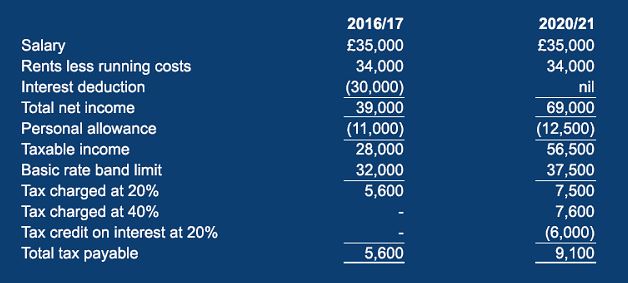
Section 24 will also be phased in from April 2017 over a four-year period, affecting individual landlords. Some of the amendments include restricting the amount of Income Tax relief landlords can get on residential property. Also, individual landlords will be taxed on revenue and not profit, so finance costs will not be taken into consideration, which will result in a loss for landlords that may be passed on to tenants.
Mortgage interest tax relief will also be phased out over the next four years, and the most landlords will be able to claim for will be the basic rate of tax, which is currently 20%. At present, landlords can claim relief at the top level of tax they pay, which means that those earning over a certain threshold can apply for relief of up to 45%.
These amendments will not apply to companies, so one way landlords can get around the implications of Section 24 is by setting up and trading under a limited company. Although this will mean landlords will avoid the negative effects of Section 24, setting up a company comes with its own obstacles and charges. There are fewer mortgage options available to companies, and there are other charges associated with owning a company including annual accounting fees (typically £1000 p/a) and a flat rate tax of 20% on all profits. Therefore, setting up a company is not always a viable alternative to paying the additional charged levied upon landlords in accordance to Section 24.
An alternative is to consider investing in commercial investments, such as loan notes or co-working space. These often need to be bought outright with cash, thus bypassing the requirement for a mortgage and subsequent tax hike.
Will there be any regime changes?
There has been some disagreement over whether there will be any regime changes in the property sector. Matt Tooth of LendInvest asserted that if property transaction volumes drop, the government might have to reconsider its housing policy and become more hands-off. Ian Thomas of LendInvest has predicted that 2017 could be the year of the u-turn when it becomes apparent that the amount of tax gained from Stamp Duty has been declining since the changes were introduced. Ian predicts that lower tax revenues will also negatively affect Philip Hammond’s proposal in his Autumn 2016 Statement to invest £1.4billion for house building to create 40,000 affordable homes and £2.3 billion to build 100,000 houses in areas of high demand. It has been calculated that the decrease in sales activity on properties worth over £1 million in the second half of 2016 has cost the Exchequer nearly £500 million.
The Bank of England however, has ruled out changing Stamp Duty of second homes or mortgage tax relief that will be implemented this April. The Financial Policy Committee has pledged to review its overall strategy for setting measures to guard against risks stemming from owner-occupier and buy-to-let mortgage markets.
In short, there is a significant amount of uncertainty whether the government will continue to target small to medium sized landlords with further policies that could pose additional negative impact on the buy-to-let market.
Widespread property price decline?
Tom Sharman, head of real estate finance at NatWest, has claimed that it will be unlikely in 2017 that there will be a widespread decline in property prices in the UK. Tom stated that “high employment, tight supply and a healthy mortgage market mean a widespread decline in prices seems unlikely.”
Although it is predicted that in 2017 property price growth will slow to 3%; low-cost mortgages and a shortage of supply vs demand will continue to buoy the property market meaning that the likelihood of a “house price crash” is extremely slim. The government has recently set out plans to build one million new homes by 2020, but the housing minister has conceded that targets for December 2016 are likely to have been missed. This puts further pressure on supply and keeps momentum within the property market.
Rental prices will increase
Demand for property will continue to outstrip supply in 2017, and this will affect prices in the rental sector. Rental costs have been predicted to rise by up to 3% due to the shortage of housing, which will be welcome news to existing buy-to-let landlords. In 2016 rental growth was relatively sluggish, and even dropped in some places such as London by 0.31%, but 2017 will see an increase once again in rent prices. Demand for property will also remain steady. Despite the effect recent events may have on the property market, it will still take a generation renter on average 19 years to get onto the property market.
Predictions for 2017 and onwards
It’s widely accepted that property increases and decreases are cyclical, and that property is more of a medium-long-term investment. 2017 looks to be a time of uncertainty with regards to the property market, but temporary political uncertainties have a minimal effect on what is essential a robust market, that continuously outperforms other asset classes. The stabilisation in house price growth is expected after a period of huge growth and it is considered the natural correction of the house price market.
In fact, a leading estate agent has predicted that over five years, typical house price values will rise by 13%, from £214,000 to £242,000. The East of England will see the largest percentage increase of 19%, meaning that the average house will cost £324,000. It is an ideal time to invest in property in Peterborough, a London commuter city that is expected to rise in desirability due to the amount of investment the area is receiving.
There is a general consensus amongst property experts that luxury properties in London will be hardest hit. A recommended strategy is to consider towns and cities outside of London and the South East, where property prices are generally lower and the market has been less affected by the hike in stamp duty. Average house prices in a city such as Liverpool stands at £164,563 (as of 1st January 2017), and an extra 3% paid in stamp duty is less pronounced than what it would be on a significantly more expensive property.
The UK’s property market has always been viewed as a stable investment, to both overseas and domestic investors. Political events in 2016 did little to destabilise the boom and bust cycles, so those looking to own property as a medium-long term asset should not be deterred.
Alternative options
Alternatively, there are certain investments that bypass stamp duty charges, such as commercial property investments. Individuals looking to avoid stamp duty charges altogether should consider loan note or office space investments, many offering high returns at a low entry point.
In conclusion, Brexit is predicted to have a marginal effect on the property market compared to rise in stamp duty, and it is still possible that the government could reverse the increase when it becomes apparent that it has negatively affected the tax revenue. Britain’s property market is still a viable investment as the country remains politically stable, and demand continues to outstrip supply, an issue that is further exacerbated by the government’s failure to build an adequate number of new houses.
Investment inquiries from China into Manchester property have increased by more than half as excitement about the Northern Powerhouse initiative continues to grow.
Juwai.com is a Chinese online property portal for buyers looking to invest in property overseas and it has stated that in November the amount of Chinese interest in Mancunian property has increased by 53.8%, compared to the same month in 2015.
t the same time, Manchester Airport Group has doubled its estimate of the value to the local economy of direct flights from Beijing to Manchester, the Telegraph reports.
The group states that, ten years from now, the economic impact of Chinese visitors to the region will be worth £500m, doubling the current value.
The Manchester-China Forum, a group promoting commercial ties between the two places, estimated that in 2016 a total of £2.1bn worth of development have had Chinese involvement.
One of the biggest projects of the year was by Beijing Construction Engineering Group’s (BCEG’s) involvement in the Middlewood Locks in Salford, worth £700m and providing 2,215 homes.
Mr Whalley said:
The property sector has been one of the most active recipients of growing connectivity between China and the UK”
Part of the reason for this increase is Manchester’s future growth, as it plans to add 227,000 homes and 200,000 jobs by 2035. It was also prompted after President Xi Jinping toured Manchester in October 2015.
Part of the reason for this increase is Manchester’s future growth, as it plans to add 227,000 homes and 200,000 jobs by 2035. It was also prompted after President Xi Jinping toured Manchester in October 2015.
Only months later, in December, a Chinese company decided to buy the pub that the President drank in.
UK house prices hit an all-time high in December after growth picked up pace for the second consecutive month, reports the Halifax house price index.
Based on the bank’s own lending figures, it now costs £222,484 to buy a typical property, a rise of 1.7 per cent.
Halifax’s three-monthly rolling figure, which it says is more accurate, also rose for the second month in succession and at 2.5 per cent, is at its highest level since last March, when the rate was 2.9 per cent.
On an annual basis, prices jumped 6.5 per cent, up from six per cent in November and a 2016 low of 5.2 per cent in October, says FTAdviser, although still well below the ten per cent peak reached in March.
Overall, property has continued to recovery following a sharp slump in activity in July and August in the immediate aftermath of the Brexit vote and amid an ongoing affordability squeeze.
Prices are being helped by a persistent shortage of houses for sale – the number of properties on estate agent’s books is hovering at a record low – and low interest rates.
Economists expect this year to see a continuation in the trend of fewer transactions and slower, but still positive average growth. London, however, could buck the trend and see prices fall on average.
Halifax predicts annual house price growth will drop to between one and four per cent by the end of 2017.
However, some expect the Brexit uncertainty to hit the economy harder when Article 50 is triggered, hitting average house prices across the country.
Nevertheless, others say the market could continue to show surprising resilience.
Alex Gosling, chief executive of online estate agents House Simple, said: “Considering the economic uncertainty the housing market faced in the second half of 2016 and how it responded, it wouldn’t be a major surprise if those predictions were knocked out of the ballpark.
“While mortgage rates remain low and assuming the labour market doesn’t being to falter, there’s no evidence to suggest the property market is about to hit a brick wall.”
Property investors ready to get into build-to-rent sector. Big time.
The UK’s build-to-rent sector is probably the country’s property winner for 2016 and the coming year is set to be even better as investors and developers alike are showing confidence in the sector.
The Government has already made its support for the sector very clear, and investor are also showing interest despite the Brexit decision and any economic uncertainty that may come with that.
JLL recently revealed in a report that investors as well as developers continue to recognise opportunities in the country’s build-to-rent sector. For investors, one of the main turn ons is the security of rental income in London and regional cities the market brings with it.
London remains a dominant player in the market with the British Property Federation estimating a total of 30,000 purpose built rental units currently under construction or complete in the capital alone.
“The greatest opportunity for the development of large scale Private Rented Communities is undoubtedly in the major metropolitan centres, as evidenced by the activity around London and Manchester in particular,” said Simon Scott, JLL’s head of investment for UK Residential Capital Markets.
“This stems from the deeper letting pools and the ability to deliver scale. Having said that, the opportunity to develop purpose built rental stock, in an age where renting is no longer seen as a tenure of last resort, should provide opportunity for viable delivery in other less mainstream locations,” he added.
JLL’s head of residential research, Adam Challis, says that investors continue to seekimproved yield positions, which is more likely to be found outside of London and England’s South.
Furthermore, the report pointed out that, regardless of looking in London or other regions in the UK, demand for this kind of property is building up across the whole country.
The disconnect is the limited new supply coming to the market and the lack of existing product. As a result, we expect to see development and investment activity growing substantially over the short to medium term.”
“New capital is competing effectively against incumbent UK residential investors, driving sharp pricing in markets such as London and Manchester. However, established investors retain an advantage as they are often more nimble and can target opportunities in secondary and tertiary cities. This has resulted in several large scale residential deals in new markets,” he explained.
“This investment into new markets is vital for further expansion of the asset class, providing broader choice and diversification for the next wave of investors in stabilised portfolios,” Scott says. “It will also demonstrate the big opportunity for new private sector investment to support regeneration activities in many UK communities,” he added.
Scott explained that the real attraction of residential investment is the variety of product that can be created to suit all risk/reward appetites. “There is a structural shortage of residential accommodation in the market, and ever growing demand pressures, so the positives significantly outweigh any perceived risks,” he said.
“The Government is increasingly supportive for a significant increase in provision of supply, so our expectation is that the sector is likely to grow, with the pent-up demand for the right product offering significant opportunity for investors and developers,” he added.
Challis added that support from politicians and planning authorities for build-to-rent is growing, and will help to get new stock developed.
This, perhaps more than anything else, is the most important ingredient needed for the sector to flourish.”
























Investment inquiries from China into Manchester property have increased by more than half as excitement about the Northern Powerhouse initiative continues to grow.
Juwai.com is a Chinese online property portal for buyers looking to invest in property overseas and it has stated that in November the amount of Chinese interest in Mancunian property has increased by 53.8%, compared to the same month in 2015.
t the same time, Manchester Airport Group has doubled its estimate of the value to the local economy of direct flights from Beijing to Manchester, the Telegraph reports.
The group states that, ten years from now, the economic impact of Chinese visitors to the region will be worth £500m, doubling the current value.
The Manchester-China Forum, a group promoting commercial ties between the two places, estimated that in 2016 a total of £2.1bn worth of development have had Chinese involvement.
One of the biggest projects of the year was by Beijing Construction Engineering Group’s (BCEG’s) involvement in the Middlewood Locks in Salford, worth £700m and providing 2,215 homes.
Mr Whalley said:
The property sector has been one of the most active recipients of growing connectivity between China and the UK”
Part of the reason for this increase is Manchester’s future growth, as it plans to add 227,000 homes and 200,000 jobs by 2035. It was also prompted after President Xi Jinping toured Manchester in October 2015.
Part of the reason for this increase is Manchester’s future growth, as it plans to add 227,000 homes and 200,000 jobs by 2035. It was also prompted after President Xi Jinping toured Manchester in October 2015.
Only months later, in December, a Chinese company decided to buy the pub that the President drank in.